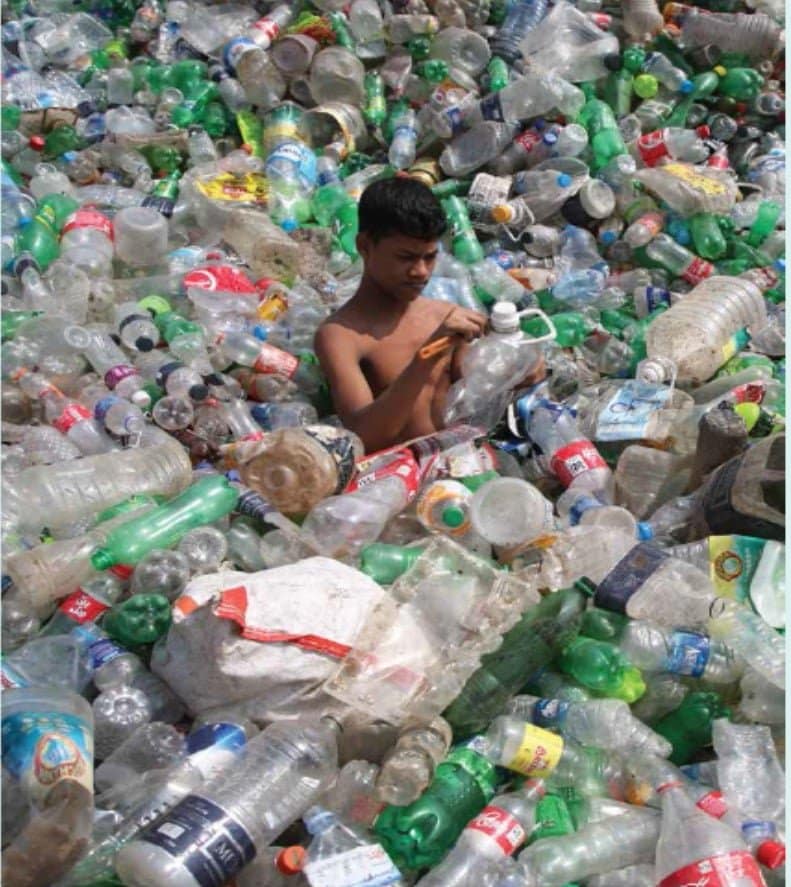
Plastic waste is now so ubiquitous in the natural environment that scientists have even suggested it could serve as a geological indicator of the Anthropocene era. Researchers estimate that more than 8.3 billion tonnes of plastic has been produced since the early 1950s. About 60% of that plastic has ended up in either a landfill or the natural environment. We’re seeing some other worrying trends. Since the 1950s, the rate of plastic production has grown faster than that of any other material. We’ve also seen a shift away from the production of durable plastic, and towards plastics that are meant to be thrown away after a single use.
More than 99% of plastics are produced from chemicals derived from oil, natural gas and coal — all of which are dirty, non-renewable resources. If current trends continue, by 2050 the plastic industry could account for 20% of the world’s total oil consumption. We need to slow the flow of plastic at its source, but we also need to improve the way we manage our plastic waste. Because right now, a lot of it ends up in the environment.
Rivers carry plastic waste from deep inland to the sea, making them major contributors to ocean pollution. A staggering 8 million tonnes of plastic end up in the world’s oceans every year. If current trends continue, our oceans could contain more plastic than fish by 2050. The issue of microplastics is much more a serious threat that the world would face in future. The global volume of plastic waste continues to grow, and some of the biggest producers don’t manage their waste effectively. In short, pollution with single use plastics has become one of the serious environmental catastrophes of the modern era.
While several national and local governments around the world have adopted policies to reduce the use of disposable plastic, India is set to impose a nationwide ban on plastic bags, cups and straws in its most sweeping measure yet to stamp out single-use plastics, where it is a growing menace. Prime Minister Shri Narendra Modi in his address to the nation on the 73rd Independence Day of India, appealed to the people of India to make the country free from single-use plastics (SUPs). This is a dream project to scrap single use plastics by 2022.
In order to make the people aware of the nature, extent and threats of SUPs, we need targeted campaigns and social engineering tools can make people aware of the concerns and alternatives to plastics. Further, we need stronger discussions with all stakeholders and scientific community to help the government to frame effective policies towards the management of SUPs. In this background, CISSA launched a nation-wide Multi Event Campaign for Single Use Plastic Free India. The campaign launched on the occasion of 150th birth anniversary of Mahatma Gandhi, 2nd October 2019 at Thiruvananthapuram.
Objectives
- Awareness campaigns with the active participation of youth on the USE and MANAGEMENT of SUPs.
- Capacity building of young trainers to take up campaigns in academic institutions, families and neighbourhood.
- Campaign for the alternatives of SUPs and promote the use of alternatives of SUPs
- Lobbying for effective management strategies and implementing extended producer responsibility
- Produce awareness materials and a dedicated website for promotion of the campaign
- Networking with NGOs, ecoclubs and other organisations to keep the campaign throughout India.

The event mainly consisted of a large assembly of students, youth and general public. Various programmes such as Poster exhibition on history and menace of plastics; Photo exhibition; Painting camp; Cultural performance by school and college students (Skit, Mime, Environmental songs, Dance, Street plays, Recitation, Kitty Show, Roller Skating); Exhibition of alternatives to plastics; and Stalls by NGOs were part of the Multi-Event Campaign. Over 1000 students representing different schools and colleges, NCC cadets, organisations fighting for the plastic ban, representatives from visual-audio-print media and public actively participated in the event. Officials from the Government, non-governmental agencies, representatives from all walks of life such as film personalities, writers, social activist, sports etc address the gathering and explain the necessity for reducing and recycling plastic for improving the environment.
Educating the children on the ill-effects of plastics has become ultimately important, and the awareness on plastic menace should start from their homes, opined renowned sculptor Sri Kanayi Kunhiraman, who kick started the campaign by painting a broom symbolically to get rid of plastic menace from the society.
